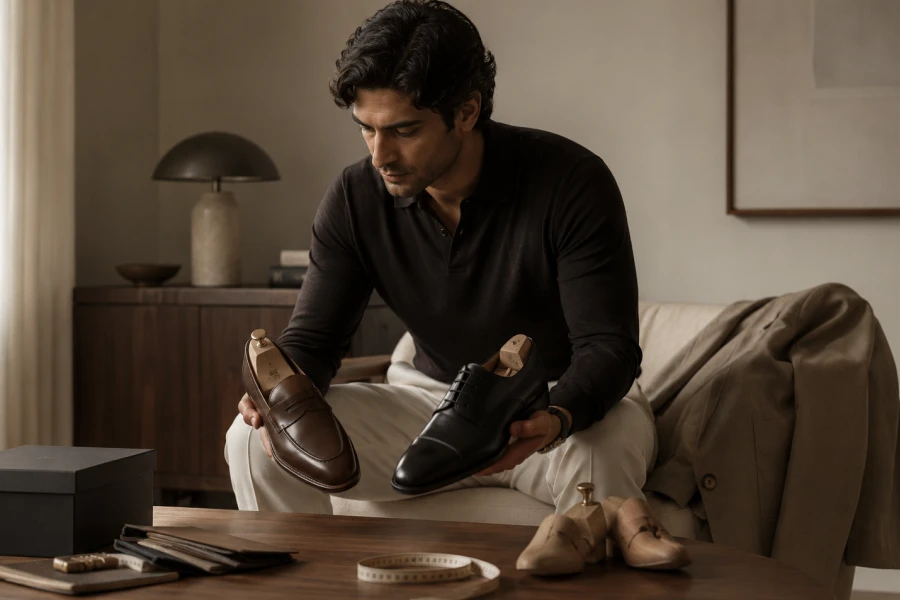
A clear men’s shoe buying strategy helps you stop collecting random pairs and start building real value. Footwear purchases often happen during sales, emergencies, or trend moments. That creates closets full of shoes that almost work. Some are uncomfortable. Some are too specific. Others repeat pairs you already own. A smarter strategy begins with purpose, not pressure. It asks where you will wear the shoes, how often, and with what clothing. This approach saves money and space. It also makes your wardrobe feel more grown-up, practical, and visually consistent.
The best shoe purchase starts before you see a product page or display shelf. First, review your current rotation. Then identify the most obvious gap. Maybe you lack polished shoes for events. Maybe your casual sneakers look worn. Maybe winter weather keeps damaging your everyday pairs. This preparation protects you from impulse buying. It also helps you compare options honestly. A smart shoe storage system can make gaps easier to see. When everything is visible, repeated mistakes become obvious.
Novelty feels exciting because it promises instant change. Need feels quieter but lasts longer. A bold pair may look interesting online, yet fail inside your actual wardrobe. A practical pair may seem less thrilling, then become your most worn option. Understanding this difference improves every purchase. Ask whether the shoe solves a repeated problem. Check whether it matches at least three outfits. Consider whether you would still want it without a discount. These questions slow down poor decisions. They also make good purchases easier to recognize. Style grows stronger through restraint.
Budget protection comes from planning, not from always spending less. Cheap shoes that fail quickly can become expensive over time. Expensive shoes that rarely get worn can waste money too. The stronger question is cost per wear. A durable pair worn often may justify a higher price. A trendy pair worn once may not. This is why a polished everyday style mindset matters. You buy for repeated use, not quick excitement. Your budget then supports consistency instead of clutter.
Materials affect comfort, maintenance, and lifespan. Leather can age beautifully when cared for properly. Suede looks rich but needs more protection. Canvas feels casual and breathable. Rubber soles may offer comfort and grip. Construction matters because shoes absorb pressure every time you walk. Examine stitching, lining, sole attachment, and flexibility. Also think about your environment. City walking, office carpets, rain, heat, and travel all create different demands. A good purchase respects those details. It should look right, feel right, and survive the way you actually live.
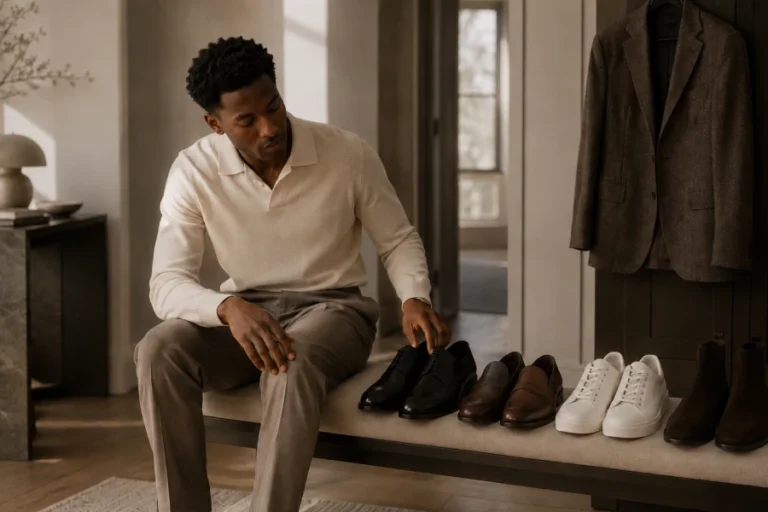
A balanced collection prevents one style category from carrying too much responsibility. Dress shoes should not be your only polished option. Sneakers should not handle every casual situation. Boots should not replace all seasonal planning. Each category brings a different visual message. Dress shoes communicate formality. Loafers suggest relaxed refinement. Sneakers feel easy and modern. Boots add strength and texture. When categories work together, your outfits gain range. This is where men’s wardrobe footwear planning becomes practical. You dress better because your options finally make sense.
Discounts can make weak choices feel logical. A marked-down shoe still needs a purpose. It still needs to fit. It still needs to match your wardrobe. It still needs to support your lifestyle. Many poor purchases begin with the phrase, it was such a good deal. The better question is whether you would buy it at full price. If the answer is no, pause. A sale should help you buy the right pair for less. It should not convince you to buy the wrong pair at all.
The strategy does not end at checkout. New shoes need integration. Test them with outfits you already own. Break them in before important events. Add care products if the material requires protection. Decide where they sit in your rotation. Remove the pair they replace if it no longer serves you. This keeps the collection from growing without discipline. It also helps you understand whether the purchase was successful. A shoe that earns regular wear becomes part of your style system. A shoe that sits unused teaches you what to avoid next time.
A better future closet comes from repeating better questions. What occasion does this pair serve. What clothes does it support. What problem does it solve. How often will it be worn. What care does it require. These questions create a buying filter that improves with time. Your taste becomes clearer because your mistakes become fewer. Your shelf becomes easier to navigate. Your outfits become more complete. Men’s shoe buying strategy is ultimately not about restriction. It is about making every purchase feel worth keeping.



Leave a comment