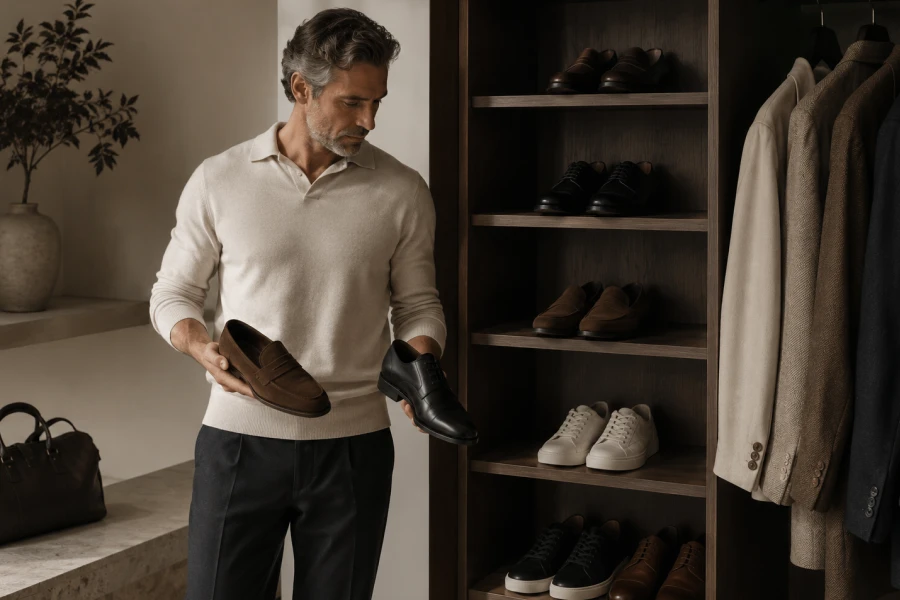
A versatile shoe wardrobe for men creates confidence before the outfit is even finished. Shoes influence posture, polish, comfort, and first impressions. They also decide whether clothes feel intentional or improvised. Many men own enough shoes, yet still miss the right pair for common situations. That usually means the collection lacks structure. A better wardrobe balances dress, casual, seasonal, and active needs. It also avoids unnecessary duplicates. When footwear choices become clearer, mornings feel calmer. You know what works, what fits, and what belongs. That quiet certainty changes how you dress.
Footwear planning should begin with your calendar. Office days need different support than casual weekends. Formal events need a sharper finish. Travel needs comfort and packability. Date nights need polish without discomfort. Home errands need ease without looking careless. When you map occasions first, shopping becomes much more focused. A wardrobe investment approach helps you choose shoes that serve repeated moments. You stop buying pairs that only look exciting in isolation. Instead, every pair earns its place through actual use.
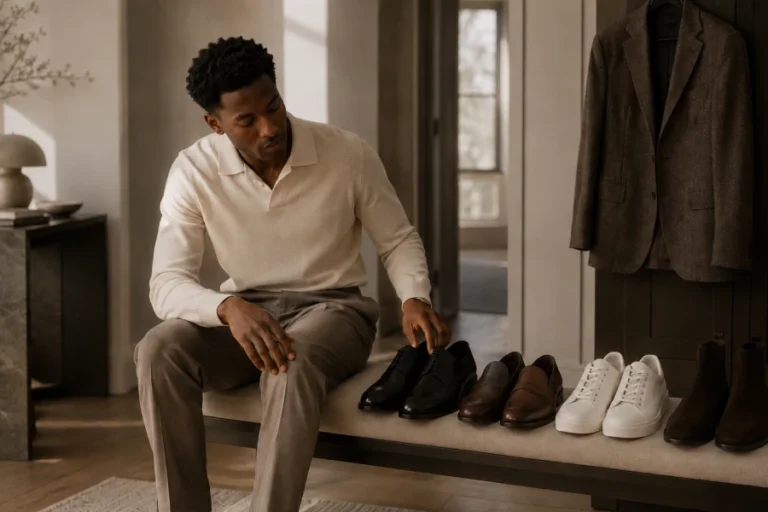
The hardest-working shoes usually look simple, balanced, and adaptable. Dark leather shoes handle formal and smart casual settings. Clean sneakers soften everyday outfits. Casual boots bring structure to denim and outerwear. Loafers offer polish without feeling too formal. A weather-ready pair protects your style during difficult seasons. These categories work because they solve common dressing problems. They also combine with many colors and silhouettes. The goal is not to own every type. The goal is to cover your real life with fewer weak spots. That makes your closet feel more complete.
Decision fatigue often appears when too many choices do too little. A crowded shoe shelf can still feel useless. You may own ten pairs but trust only two. A structured rotation fixes that problem. Each pair has a clear role, so the decision becomes practical. Formal event means one option. Casual dinner means another. Rainy commute means a third. This creates a smooth dressing rhythm. It also prevents last-minute frustration. When shoes are chosen with intention, every outfit starts from a stronger base and ends with more polish.
Color makes or breaks versatility. Black works best for sharper looks and formal clothing. Brown offers warmth across denim, chinos, and tailored separates. White or off-white sneakers brighten casual outfits. Dark boots handle rugged combinations without overwhelming them. Neutral colors usually stretch further than loud ones. That does not mean personality disappears. Texture, shape, and finish still create interest. However, your first pairs should support many outfits. Save bold colors for later, once your foundation feels complete. A smart palette keeps each purchase useful beyond one trend or season.
Seasons reveal gaps quickly. Summer may call for breathable sneakers, loafers, or refined sandals. Fall often favors boots and textured materials. Winter needs grip, durability, and weather protection. Spring benefits from lighter colors and easier cleaning. A strong wardrobe adjusts without requiring constant shopping. This is where seasonal shoe planning becomes useful. You can rotate pairs before they wear down. You also avoid panic purchases when the weather changes. Planning ahead makes style feel prepared, not reactive.
Uncomfortable shoes ruin even the best outfit. They change how you walk, stand, and move through the day. Fit should never be treated as a minor detail. Check width, arch support, heel slip, toe room, and material break-in. A beautiful pair that hurts will stay in the closet. A comfortable pair that looks refined will earn repeated wear. This is why smart style always includes function. Comfort is not the opposite of elegance. It supports it. When shoes fit properly, confidence becomes visible without needing extra effort.
A strong footwear system naturally reduces waste. You stop chasing every sale. You stop repeating the same category. You stop buying shoes that only match one outfit. Instead, you identify the next useful upgrade. Maybe your dress shoes need replacing. Maybe your casual sneakers look tired. Maybe your boots no longer match your lifestyle. Each decision becomes easier because the collection has a plan. This is the heart of buying fewer better shoes. The result feels cleaner, smarter, and more sustainable.
Trends change, but strong footwear categories remain useful. Shapes may shift slightly. Soles may become thicker or slimmer. Colors may move in and out of attention. Still, clean, appropriate, well-maintained shoes always support good style. A long-term wardrobe gives you room to evolve without starting over. You can add statement pairs carefully. You can retire worn pairs with confidence. You can update details while keeping the foundation steady. That is why a versatile shoe wardrobe for men feels powerful. It turns everyday dressing into a dependable system.


Leave a comment